
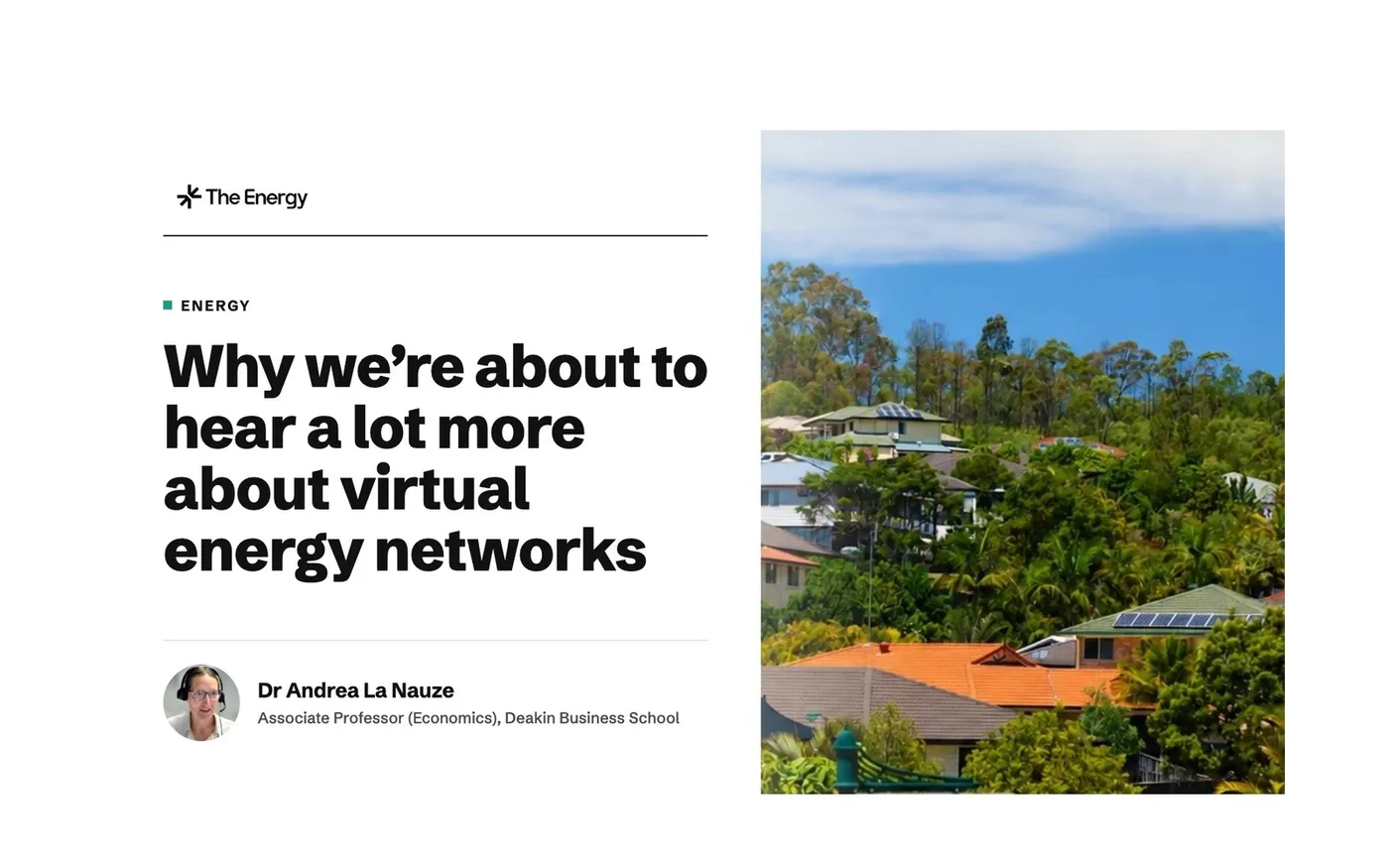
Sharing the solar power from one rooftop with a neighbour who has no panels has moved a step closer to everyday reality, and WinZero is proud to have played a part.
WinZero supported the Deakin University-led Virtual Energy Network (VEN) study, a collaboration that also involved QuantumNRG and ReThink Sustainability. The study’s lead researcher, Associate Professor Andrea La Nauze, has now explained what the research tells us in a new article for The Energy, and we’re sharing the highlights here.
What is a virtual energy network?
Australia has more rooftop solar than ever, yet renters and households without panels can’t easily share in the benefits. A VEN uses software to match electricity exported by one property with electricity used at another, through the existing grid. Payments for the matched energy simply appear on customers’ bills.
Unlike a microgrid, a VEN doesn’t build a separate physical network, and unlike a community battery, it doesn’t store solar for the evening.
Key points from the article
- Both sides can win. If a solar owner would otherwise earn about 2c/kWh and a buyer pays about 14c/kWh for the energy component, there is around 12c/kWh to share. Trading at 8c/kWh gives each side a 6c/kWh benefit. Actual savings depend on tariffs, fees and how much energy is matched.
- The Deakin study was a randomised controlled trial. It included 266 participants across 296 sites and was funded by Energy Consumers Australia. During peak solar hours, about 12c/kWh was available to share, and the average peer-to-peer price was 8c/kWh.
- Households responded to prices. Taking part in VEN trading increased non-solar participants’ use of electricity during sunny hours, lowered the effective price of their imported power, lifted export returns and improved perceptions of fairness.
- There are limits. The results reflect short-term responses from selected participants on one plan, and the article notes that curtailment of solar wasn’t directly measured.
- Local grid benefits aren’t guaranteed. Wholesale prices don’t capture local congestion, so the next step is testing prices that better reflect conditions on the local network.
- VENs sit between two other approaches. They offer more predictability than wholesale-linked plans and more flexibility than fixed free-hour offers, with a few retailers already offering VEN products.
Why it matters for our community
Virtual energy networks are part of WinZero’s support for more solar in our community, because they point to a fairer way to share the benefits of local solar with renters and households that can’t install panels. The Deakin findings are encouraging: when the price signal is right, people respond. The formal research is now complete, and we’re reviewing what a longer-term, commercially viable model could look like.
Thank you to the researchers, partners and participants who made this work possible.
Read the full article
Andrea La Nauze’s explainer covers how VENs work, how they compare with other solar plans, and what the evidence says so far.
Read “Why we’re about to hear a lot more about virtual energy networks” on The Energy
Find out more about our pilot on the Virtual Energy Network project page.